“Zoning Variances, Approvals, and Campaign Funding: Following Development Decisions in Port St. Lucie”
Introduction
Zoning decisions can be worth millions of dollars. A zoning variance that allows a property owner to build more homes, increase building height, or change land use can dramatically increase property value.
That’s why developers and real estate companies take zoning very seriously—and why they fund political campaigns. The question voters should ask: When a major campaign donor requests a zoning change, do they receive favorable treatment?
This investigation examines the connections between Port St. Lucie campaign donors and city zoning decisions.
Why Zoning Matters
What is Zoning?
Zoning is the government’s way of controlling land use. Different zones are designated for:
- Single-family residential
- Multi-family residential (apartments)
- Commercial
- Industrial
- Open space/conservation
Zoning rules specify:
- How much you can build
- How tall buildings can be
- How many units you can have
- Parking requirements
- Setback distances
Why It Matters:
A landowner with a piece of property zoned for single-family homes can’t build a 100-unit apartment complex. But if they get a zoning variance or rezoning, that same land becomes worth millions more.
Example:
- Property zoned for 1 single-family home: $500,000 value
- Same property rezoned for 20 condos: $10,000,000 value
Zoning decisions therefore have enormous financial implications for developers—and they know it.
The Zoning Process in Port St. Lucie
Port St. Lucie’s zoning process involves several steps:
1. Application
- Landowner/developer submits application for zoning change, variance, or special use
- Includes development plans, site plans, impact analysis
2. Planning & Zoning Board Review
- Port St. Lucie Planning & Zoning Board holds public hearing
- Public comment is allowed
- Board recommends approval or denial
3. City Council Review
- Application goes to Port St. Lucie City Council
- City Council holds public hearing
- Public comment allowed
- City Council votes to approve or deny
- Mayor’s vote counts (one of five council votes)
4. Implementation
- If approved, developer can move forward
- Building permits required before construction
The Mayor’s Role:
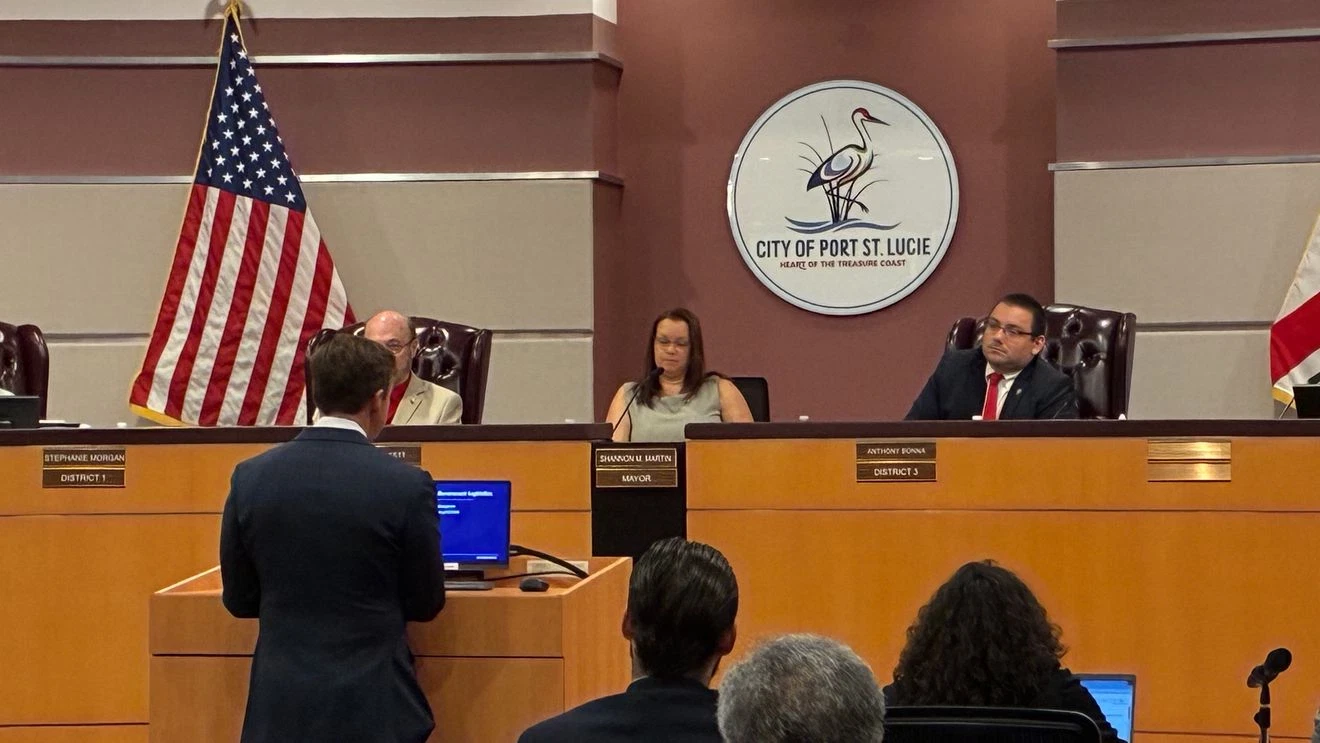
The mayor has one vote on the five-member city council. While not dominant, the mayor’s vote can be decisive in close decisions (3-2 votes).
Question for voters: Did the mayor vote differently on zoning applications from major campaign donors?
Investigating Zoning Decisions
Here’s how to investigate whether campaign donors received favorable zoning treatment:
Step 1: Get Campaign Donor List
- Access voterfocus.com
- Identify all major donors ($500+) from real estate/development sector
- List company names and donation amounts
Step 2: Get Zoning Application Records
- Visit cityofpsl.com/Planning & Zoning
- Request or download a list of zoning applications 2024-2025
- Include approved, denied, and pending applications
- Note applicant names, property addresses, and decision dates
Step 3: Cross-Reference
- Compare donor list to zoning applicant list
- Identify any major donors who submitted zoning applications
- Note what was requested (rezoning, variance, special use)
- Document what was approved/denied
Step 4: Research Each Application
- Get the complete file for applications from major donors
- Review Planning & Zoning Board meeting minutes
- Review City Council meeting minutes
- Note all public comments
- Document the votes
Step 5: Analyze the Voting Pattern
- How did the mayor vote on zoning for major donors?
- How did the mayor vote on zoning for non-donors?
- Compare approval rates
Step 6: Look for Patterns
- Did major donors have higher approval rates?
- Were applications from donors approved faster?
- Were there fewer public hearings for donor applications?
- Were conditions/restrictions different for donors vs. non-donors?
Key Questions to Answer
For each zoning connection between a donor and an approved application:
1. What was the specific request?
- Rezoning to allow denser development?
- Variance from setback or height requirements?
- Conditional use approval?
- Density bonus (building more units than zoning allows)?
2. Did the mayor support this application?
- Check voting records on psl.legistar.com
- Did the mayor vote yes?
- Did the mayor speak in favor during discussion?
- Did the mayor request special conditions?
3. Was there public opposition?
- Were there neighbors opposing the zoning change?
- Did the community object to the density or type of development?
- Was the mayor responsive to community concerns or to the donor?
4. What conditions were imposed?
- Were there requirements (like traffic mitigation, landscaping, affordable housing)?
- Were conditions less stringent for donor applications?
- Were conditions more stringent for non-donor applications?
5. How did this decision compare to similar applications?
- Are comparable zoning requests treated similarly?
- Does favoritism appear systematic or case-specific?
Example Investigation: Hypothetical Zoning Scenario
Scenario:
KHomes Payments LLC (a major campaign donor, $1,000) owns a 50-acre property zoned for single-family homes (1 home per 5 acres = ~10 homes maximum).
KHomes applies for rezoning to allow mixed-use development with 200 units (20x more density).
Initial Application: March 2025
- Planning & Zoning Board recommends denial (citing traffic, schools, infrastructure)
- Community opposition: 40 people attend public hearing against rezoning
City Council Vote: April 2025
- Vote count: Mayor votes YES, 2 council members vote YES, 2 vote NO
- Result: Approved (3-2)
The Suspicion:
KHomes donated $1,000 to the mayor’s campaign in July 2025—several months after the zoning approval.
Wait, that’s backwards! The donation came after the approval, not before.
But this raises a different question: Is the donation a “thank you” for the favorable vote? Some observers might see it that way.
Investigation:
- Did KHomes make political donations before the zoning vote? Check donations from other candidates, PACs, or earlier campaign cycles
- Did KHomes lobby city officials before the vote? Check meeting records
- What was the mayor’s reasoning for supporting the rezoning? Review meeting minutes
- How does this zoning decision compare to other similar requests?
How to Access Zoning Records
Port St. Lucie makes zoning records public. Here’s how to get them:
Online:
- Visit psl.legistar.com (city’s official record system)
- Search by application number, property address, or applicant name
- Access meeting agendas, minutes, staff reports
- View all public documents related to the application
Video:
- Visit psl.granicus.com
- Search for Planning & Zoning Board or City Council meetings
- Watch the actual hearing and vote
- See how council members discussed the application
In Person:
- Visit Port St. Lucie City Clerk’s Office
- Request specific zoning files
- Review applications and associated documents
- Take notes or ask for copies
By Public Records Request:
- Request: “All zoning applications submitted by [Company Name] 2024-2025”
- Include: Complete files, staff reports, voting records, public comments
- Use: Florida Public Records Law (Chapter 119, F.S.)
Red Flags in Zoning Decisions
Watch for these warning signs when examining zoning decisions:
Red Flag #1: Zoning Applications from Campaign Donors
- Company donates to campaign
- Company requests zoning change
- Application approved shortly after or before donation
- Timing and donor status suggest possible quid pro quo
Red Flag #2: Approval Despite Community Opposition
- Zoning hearing packed with community members opposing
- Planning & Zoning Board recommends denial
- City Council approves anyway
- Especially suspicious if applicant is campaign donor
Red Flag #3: Different Standards for Donors vs. Non-Donors
- Donor application approved with minimal conditions
- Similar non-donor application required extensive conditions
- Suggests preferential treatment
Red Flag #4: Mayor’s Vote Pattern
- Mayor votes YES on applications from major donors
- Mayor votes NO on similar applications from non-donors
- Calculate approval rates to see if pattern exists
Red Flag #5: Fast-Tracked Approvals
- Donor application approved quickly
- Non-donor applications take much longer
- May indicate prioritization of donor interests
Red Flag #6: Lack of Public Hearing
- Some zoning applications don’t require public hearings
- Campaign donors’ applications may skip hearings when possible
- Non-donor applications required hearings
- Suggests unequal process
Analyzing Zoning Vote Patterns
Create a spreadsheet to track voting patterns:
| Applicant | Donor? | Request | Staff Rec. | P&Z Vote | Mayor Vote | Council Vote | Approved? |
|---|---|---|---|---|---|---|---|
| KHomes | Yes | Rezone | Deny | Deny 4-1 | YES | 3-2 | Approve |
| Developer A | No | Rezone | Deny | Deny 5-0 | NO | 1-4 | Deny |
| Berry USA | Yes | Variance | Approve | Approve 5-0 | YES | 5-0 | Approve |
| Developer B | No | Variance | Approve | Approve 5-0 | YES | 4-1 | Approve |
Analysis:
- KHomes (donor): Approved despite staff and board recommendation to deny
- Developer A (non-donor): Denied consistent with staff and board recommendation
- Berry USA (donor): Approved consistently with recommendations
- Developer B (non-donor): Approved consistent with recommendations
Finding: KHomes (donor) received approval against recommendations, while Developer A (non-donor) was denied with recommendations. This suggests possible favoritism.
Specific Port St. Lucie Zoning Cases to Research
While you conduct your own research, consider these angles:
1. Large Rezoning Requests
- Search for recent rezoning applications
- Check if applicants are campaign donors
- Research the voting patterns
2. Variance Requests
- Setback variances allow closer building to property lines
- Height variances allow taller buildings
- These often benefit developers financially
- Check if variance applicants are donors
3. Density Bonuses
- Applications requesting more units than zoning allows
- Typically benefit developers significantly
- Check donor status of applicants
4. Conditional Use Approvals
- Special uses in certain zones
- May allow non-typical development
- Check voting patterns
5. Comprehensive Plan Amendments
- Changes to long-term land use guidance
- Most significant zoning changes
- Highest stakes for developers
- Definitely research donor connections
What to Do If You Find Concerning Patterns
1. Document Thoroughly
- Create detailed spreadsheet with all cases
- Note dates, votes, conditions, applicant information
- Calculate approval rates for donors vs. non-donors
- Document statistical significance (if pattern is clear)
2. Prepare a Public Presentation
- Create charts showing voting patterns
- Summarize findings clearly
- Prepare for questions and criticism
3. Contact City Council
- Present findings at public comment period
- Request explanation of voting patterns
- Ask for policy changes to prevent favoritism
4. Media Outreach
- Provide findings to local journalists
- Share all documentation and sources
- Request investigation and coverage
5. File Ethics Complaints
- If voting pattern suggests deliberate favoritism
- File with Florida Commission on Ethics
- Document specific conflicts of interest
6. Support Reform
- Advocate for:
- Automatic recusal from votes affecting donors
- Contribution limits
- Transparency requirements
The Bottom Line
Zoning decisions affect property values, community character, and quality of life. When voters notice patterns showing campaign donors receive favorable zoning treatment, that’s a serious accountability issue.
Key questions voters should ask:
- Does my mayor have a pattern of supporting zoning applications from major campaign donors?
- Do donor applications receive treatment different from non-donor applications?
- Are zoning decisions made based on community needs and planning principles, or based on campaign funding?
- Would I want this level of donor favoritism if it was happening in my neighborhood?
Port St. Lucie residents have the right—and the tools—to investigate these connections. Public records exist specifically to enable this kind of citizen oversight.
References
Florida Statute Chapter 163 – Planning and Zoning. Retrieved from https://law.justia.com/codes/florida/title-ix/chapter-163/
City of Port St. Lucie. (2025). Planning & Zoning Board. Retrieved from https://psl.legistar.com/DepartmentDetail.aspx?ID=41086
City of Port St. Lucie. (2025). Planning & Zoning Department. Retrieved from https://www.cityofpsl.com/Government/Your-City-Government/Departments/Planning-Zoning
Florida Statute Chapter 119 – Public Records Law. Retrieved from https://law.justia.com/codes/florida/title-ix/chapter-119/
Florida Commission on Ethics. (2025). Complaint Process. Retrieved from https://ethics.state.fl.us/

Leave a Reply